Artificial Skin Utilizing Electroactive Polymer Plastized Gels (EPPGs)
 Work Under Embargo
Project Summary
EPPG-Based Artificial Skin & Hydrodynamic Sensing
In fish and amphibians, skin acts as a sophisticated flow-sensing interface. This research translates that biological function into an engineered sensing system for underwater platforms.
Technical Approach & Methodology:
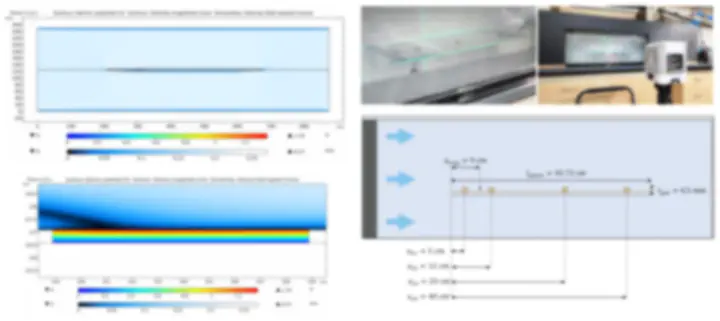
- Design & Fabrication: Developed a soft, transparent, surface-mounted skin using electroactive plasticized polymer gels (EPPGs) integrated onto a rigid rectangular plate.
- Fluid Dynamic Context: Established the theoretical force distributions for flow over canonical shapes to predict sensor response.
- Experimental Testing: Conducted comprehensive flow tank testing to evaluate sensor sensitivity and voltage generation under varying hydrodynamic loads.
- Multiphysics Simulation: Developed a computational model in COMSOL Multiphysics to simulate gel deformation, providing a high-fidelity comparison between theoretical predictions and experimental results.
This work provides a framework for self-powered, transparent, “smart” skins that enable underwater vehicles to perceive their environment with the same tactile sensitivity as biological organisms.

Nazanin Minaian
Ph.D. in Mechanical Engineering | Research Faculty
My research interests include electroactive polymers, flow sensing, energy harvesting, and computer vision.