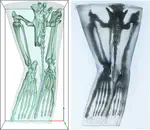
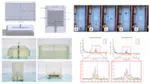
This study introduces a systematic method for creating high-fidelity, 3D-printable anatomical phantoms of a California sea lion pelvis. By segmenting CT scan data (DICOM) and using Dynamic Mechanical Analysis (DMA) to match the viscoelastic properties of medical gelatins to biological tissues, we developed a quad-layered training model. These phantoms mimic the skin, blubber, muscle, and bone of the caudal gluteal region, providing a scalable, bio-accurate tool for veterinary blood collection training and advancing the field of biomimetic medical education.